THE CLOTH
Hemp, flax or cotton
Strong, plain-woven cloth, usually hemp or flax. The best artists’ linen is spun from long flax fibres.
Where it came from doodlecanvas
WHAT IS UNDER A PAINTING
A painting is not just paint. It is a small, layered structure.

LINEN size · ground
0.1 cm Corner expansion that cracked a painting
A wooden frame, a woven cloth, a seal of size, a ground, and only then the picture. Each layer moves with the air around it. Here is how canvas works, where it came from, and what keeps it stable, in plain English.
Plain English, with the sources linked.
THE SHORT ANSWER
Canvas is one of the most commonly used
supports for painting, and it is lighter than wood.
THE CLOTH
Strong, plain-woven cloth, usually hemp or flax. The best artists’ linen is spun from long flax fibres.
Where it came fromTHE PREPARATION
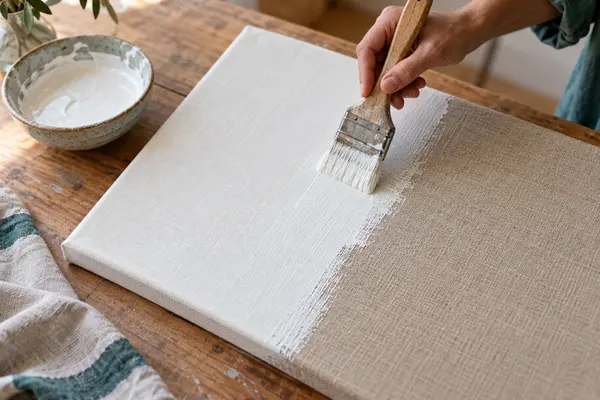
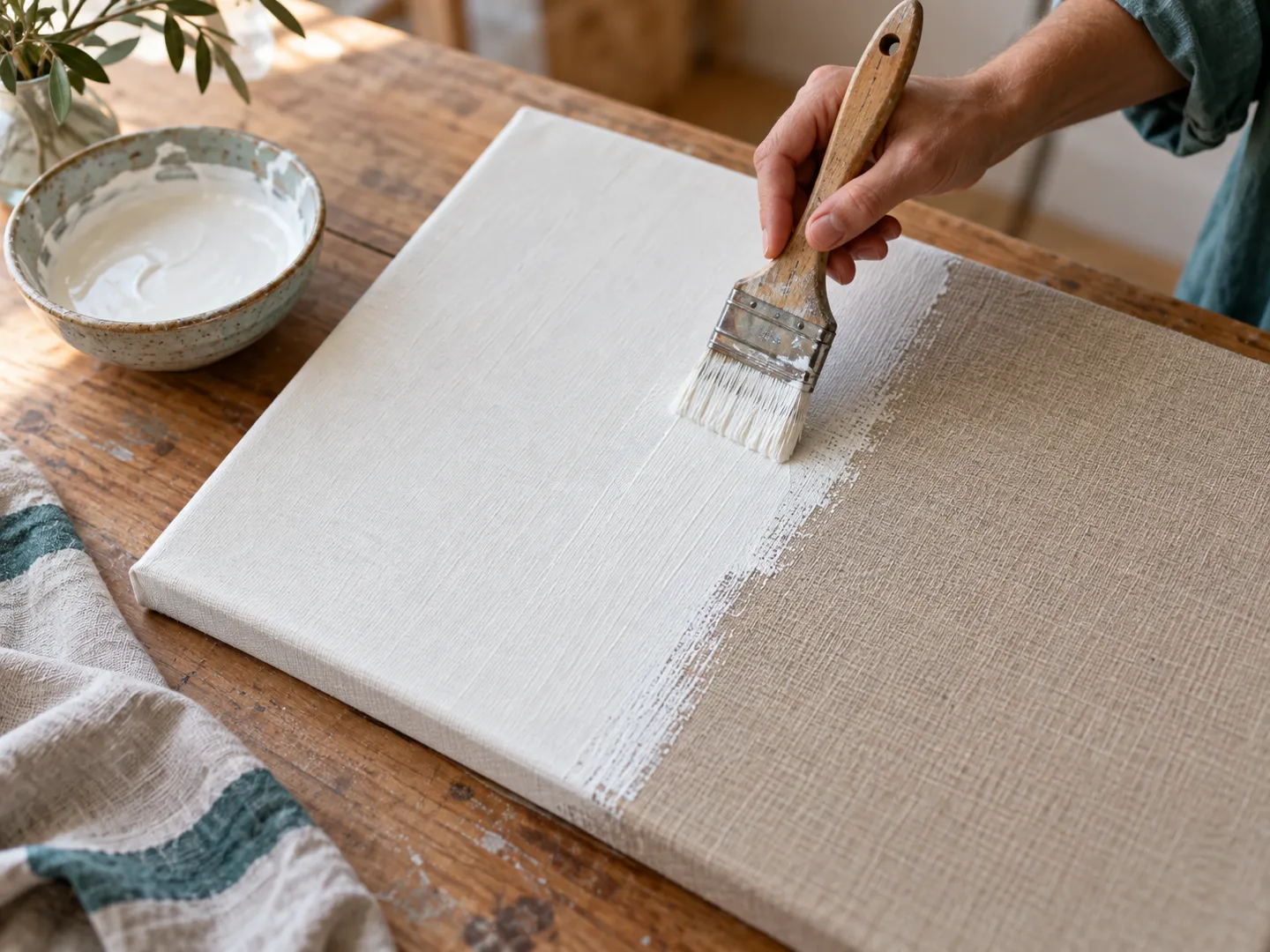
Paint never goes straight on. A coat of glue size seals the fibres, then a ground gives an even surface.
See the layersTHE CARE
Canvas, size and paint all respond to humidity. Conservators suggest 40–60% relative humidity.
Why it mattersLAYER BY LAYER
Pick a layer to see what it does. A traditional canvas painting is built from the back to the front, and each layer has its own job.
Modern ready-primed canvases follow the same idea, though the materials may differ from the traditional glue size and ground described here.
LOOK AFTER IT
Hang or store paintings where conditions stay moderate. The Canadian Conservation Institute suggests 40–60% relative humidity and 18–24°C.
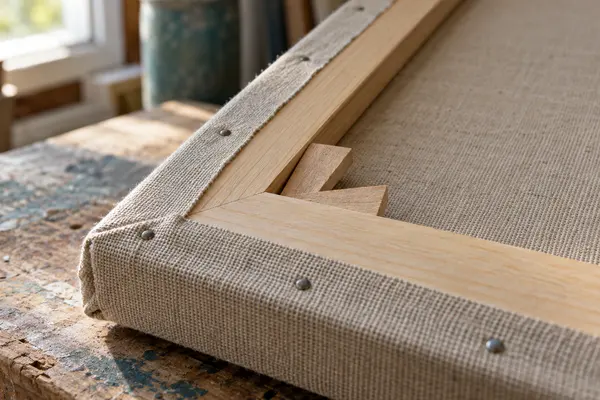
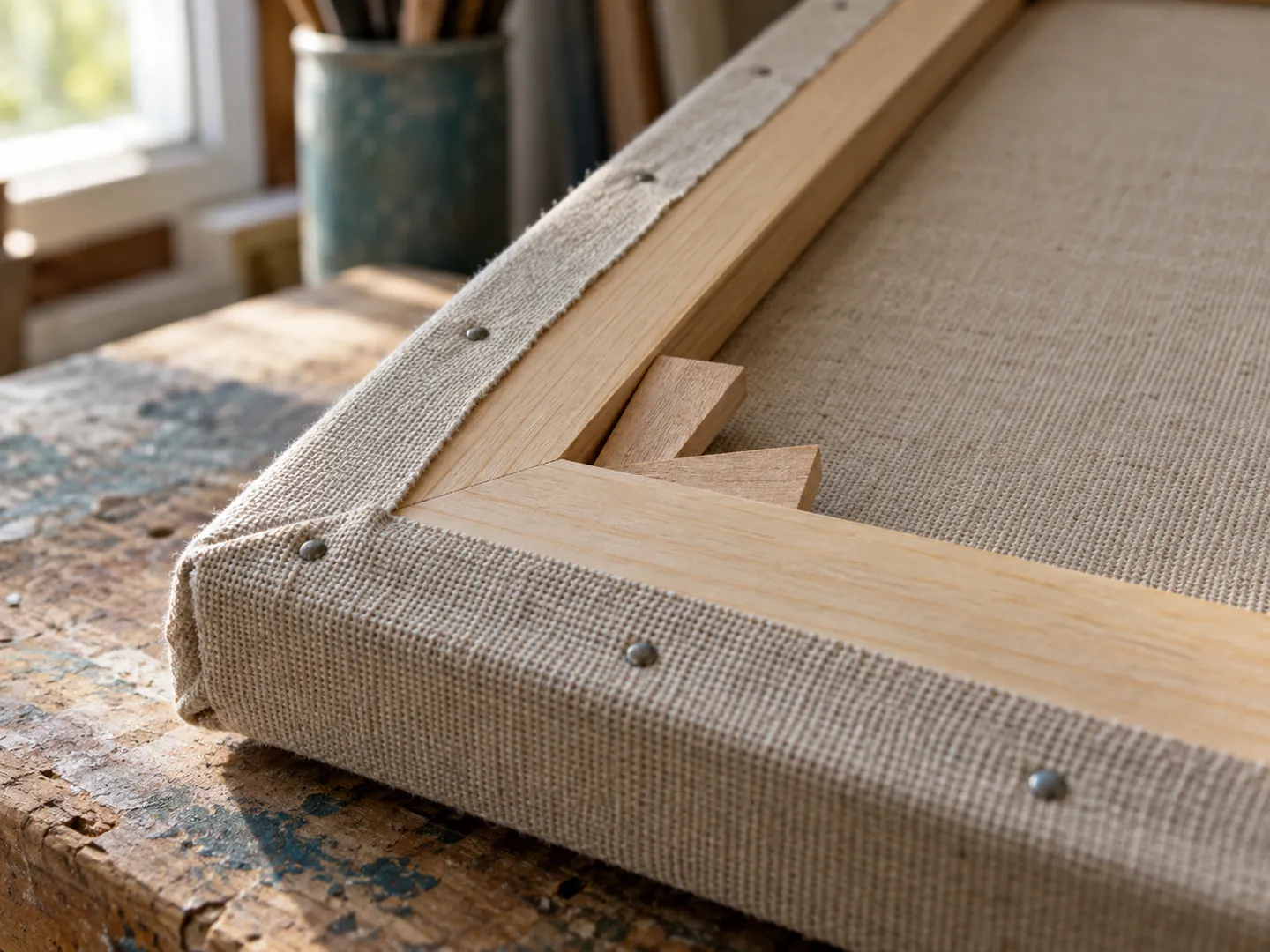
Do not tap the keys of a finished painting to tighten it. If a key is loose, the institute says to secure it with finger pressure only.
If you prepare your own canvas, adjust the tension before sizing, and size it before painting, so oil paint does not sit directly on the fibres.
Tacks or staples should be evenly spaced. Widely spaced or missing ones can let the canvas ripple when the air is dry.
WHAT CONSERVATORS MEASURED
A painting on canvas is sensitive
to tension and to the air around it.
0.1 cm
Corner expansion that cracked a painting
In an experiment reported by the Canadian Conservation Institute, opening the corners of a 76 × 102 cm painting by just 0.1 cm caused corner cracking when the humidity fell from 70% to 10%.
TENSION · CCI EXPERIMENT
40–60% RH
Suggested display and storage conditions
The institute suggests mid-range relative humidity of 40–60% and 18–24°C. Low humidity makes the size, ground and paint stiffer, and can cause distortions at the corners within days or weeks.
CLIMATE · CCI GUIDANCE
That is why conservators advise against tapping the keys of a finished painting to tighten it: a fraction of a millimetre at the corners can be enough to crack the layers when the air dries out.
CANVAS FACTS
The word canvas comes, through Anglo-French, from the Latin cannabis, meaning hemp. Merriam-Webster dates its first known use in English to the 13th century.
The earliest surviving painting canvases date from the late 14th century. The National Gallery’s earliest, a Madonna of Humility from about 1390, may have been a banner.
Wood panels were the dominant support for Western easel paintings until the early 16th century. The common use of fabric supports can be traced to 16th-century Venice.
Until the late 18th and early 19th century all cloth was woven on hand looms, so large canvases were stitched together from narrower pieces.
Artists’ canvas is a single-warp cloth, much lighter than sail canvas. The best grades use flax fibres about 25 cm (10 inches) long.
QUICK QUESTIONS
Short answers to the questions people ask most.
Traditionally strong unbleached cloth, usually hemp or flax (linen), fixed over a wooden frame. Cotton is also used, but it was uncommon as a painting support until the late 19th century.
Linen comes from flax, a long bast fibre. Cotton fibres are much shorter than bast fibres, which makes cotton yarns weaker. Britannica notes the best artists’ canvas uses flax fibres about 25 cm long.
Artists protect the cloth with a coat of glue size rather than painting straight onto it, because oil paint becomes acidic within a short time. One or more layers of ground then go over the size.
Both are wooden frames that hold the canvas. A strainer has fixed corners; a stretcher has expandable corners, which are opened slightly by tapping in small wooden wedges called keys.
The Canadian Conservation Institute calls keying out a painted canvas highly inadvisable, because it can crack the paint and ground. Keys are for the artist before the painting is finished; for an old painting, ask a conservator.
Updated
A NAME WITH ROOM TO FILL
doodlecanvas.com is part of the DoodleSale portfolio. It isn't in an auction right now, but you can ask about leasing it.